
On Sep 1, 2026 a small story appeared in a local Miami newspaper. Under normal circumstances it might have passed largely unnoticed. This one, however, carries the potential to become one of the most significant pieces of Cuban news in years.
According to reports from sources allegedly close to the Castro family, Raúl Castro was seriously ill and receiving life-support treatment in hospital. At 95 years old, and with a diagnosis of colon cancer several years ago, the rumours inevitably attracted attention.
The problem, as always with Cuba, is separating fact from speculation.
The Cuban government has long been one of the world’s most tightly controlled political systems, particularly when it comes to the health and private affairs of senior leaders. Anyone who remembers Fidel Castro’s final years will recall how little reliable information emerged until the very end. Once again, we find ourselves relying on leaks, whispers and claims from those supposedly within the inner circle.
Yet almost as quickly as the rumours appeared, they seemed to collide with reality. Only days later, Raúl was seen attending a military gathering, looking every bit his 95 years but undeniably present. Whether the appearance was planned long in advance or hurriedly arranged is impossible to know, but the symbolism was unmistakable. At a moment when stories of his imminent demise were circulating, Cuba’s most powerful revolutionary veteran appeared in public wearing the political equivalent of a sign that read: “Don’t believe everything you hear. I’m still here and I’m still in charge.”
Whatever the truth about his health, the reports prompted me to reflect on Raúl Castro’s remarkable and often overlooked life.
Forever in Fidel’s Shadow
For most people outside Cuba, identifying Fidel Castro is easy. The beard, a cigar, the olive-green fatigues, the endless speeches and the larger-than-life personality made him one of the most recognisable political figures of the twentieth century.
Raúl is different.
Less charismatic, less theatrical and considerably less interested in centre stage, he has spent most of his life standing just behind his elder brother. Yet while Fidel was often the face of the Cuban Revolution, Raúl was the “mandarin” operating behind the scenes and making things happen.
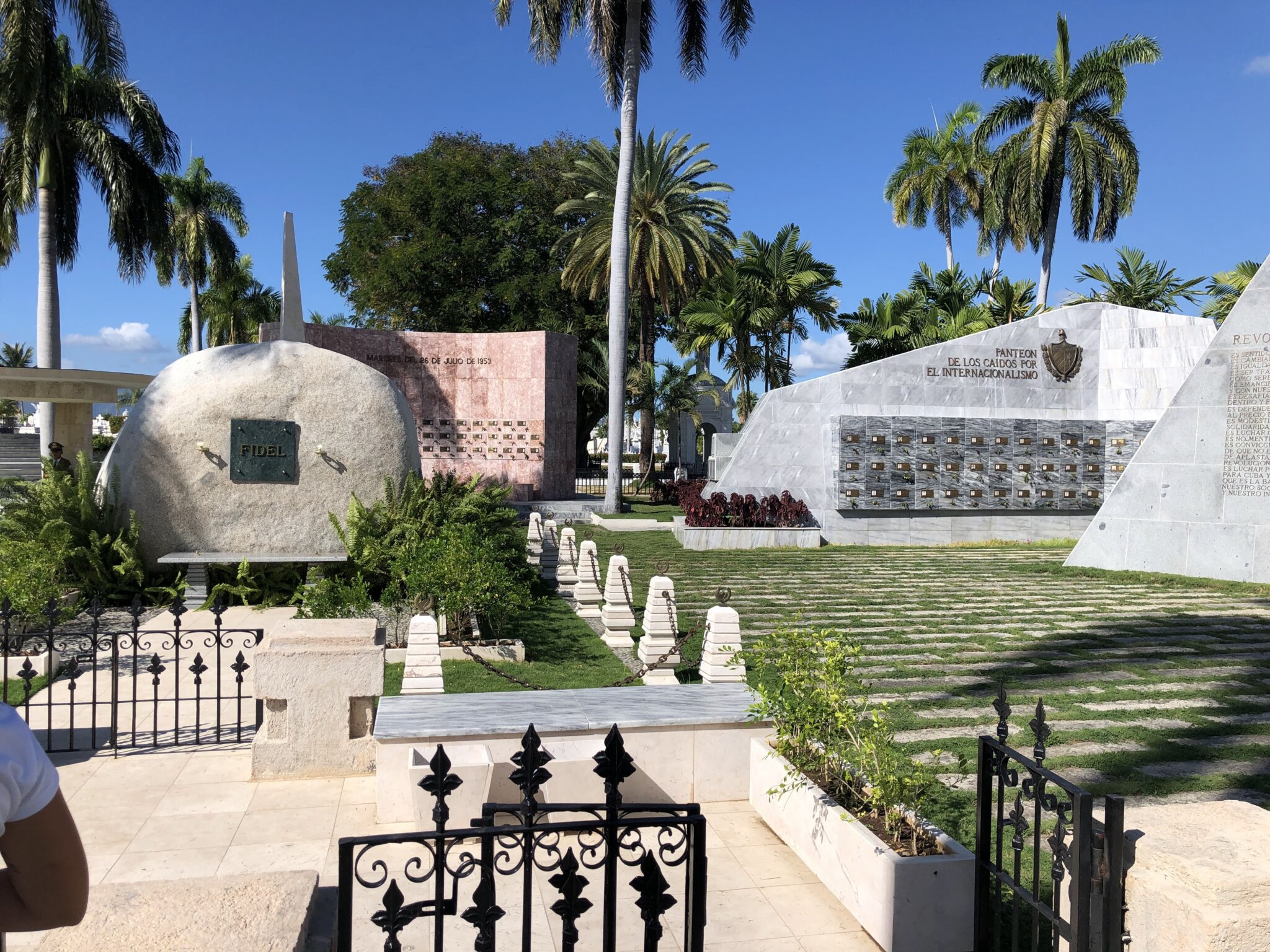
Born in 1931, Raúl was only 22 when he joined his elder brother, Fidel, in the attack on the Moncada Barracks in 1953, the failed assault that effectively launched the Cuban Revolution.
The brothers were arrested, imprisoned for nearly two years and then exiled to Mexico. There, fate took another decisive turn when Raúl introduced Fidel to an Argentine doctor named Ernesto “Che” Guevara.
The rest, as they say, is history.
El Caballo y La China
One thing Cubans have never lacked is a sense of humour.
In a country where political criticism can be risky, nicknames are a national art form. Nearly everyone acquires one eventually, whether they want it or not.
Fidel’s was perhaps the most famous. He was known as El Caballo (“The Horse”). The nickname carried connotations of strength, virility and dominance, but it also had a peculiarly Cuban significance. In the traditional charada lottery system, where every number is represented by a symbol, the number one is a horse. For many Cubans, there could only ever be one number one.
Raúl’s nickname is rather more cryptic: La China.
The origins are rooted in Havana gossip rather than historical fact. For years rumours have circulated regarding Raúl’s personal life, leading some Cubans to refer to him as La China, using a form of Cuban slang intended to mock perceived homosexuality. As with much of Cuba’s political folklore, separating truth from invention is almost impossible. What matters is less whether the rumours were accurate and more that they existed at all.
It is perhaps telling that while Fidel’s nickname portrayed him as a powerful stallion leading the herd, Raúl’s reflected the teasing irreverence for which Cubans are famous.
Even at the very pinnacle of power, nobody entirely escapes Cuban wit.
From the Granma to Havana
In December 1956, the revolutionaries returned clandestinely to Cuba aboard the yacht Granma.
The expedition was a near disaster.
Of the 82 revolutionaries who landed, only a fraction survived the initial encounters with Batista’s forces. Scattered across mangrove swamps and sugarcane fields, the group seemed unlikely to achieve anything, let alone overthrow a government.
Yet just over two years later Batista fled Cuba and the revolution triumphed.
At only 28 years old, Raúl became head of the Revolutionary Armed Forces (FAR), a role he would continuously hold for almost half a century.
Building Cuba’s Military Machine
Raúl’s greatest influence was not as a public speaker or ideological visionary. It has always been as a military organiser.
Over decades he transformed a guerrilla force into one of Latin America’s largest and most disciplined armed forces. In doing so, he has also become the longest-serving defence minister in the world.
His role carried unusual importance. Cuba is not simply another country with a military establishment. Throughout the Cold War and beyond, the island has faced invasion threats, assassination plots, sabotage campaigns and the economic pressures of the US embargo. For the revolutionary leadership, survival has depended on ensuring the armed forces remained both effective and loyal.
Raúl has excelled at that task.
Supporters argue that he created the institutional framework that allowed revolutionary Cuba to survive. Critics contend that the same military structure has helped preserve a highly centralised political system that restricts dissent and political freedoms.
As with much of Cuban history, perspective depends largely on which side of the Florida Straits you happen to be standing.
The Good, the Bad and the Controversial
Few political figures remain in power for seven decades without accumulating a complicated legacy.
Raúl Castro’s record includes significant achievements as well as considerable controversies.
His supporters point to his role in strengthening Cuba’s education and healthcare systems, modernising aspects of the economy after the collapse of the Soviet Union and helping negotiate the historic thaw in relations with the United States during Barack Obama’s presidency.
Critics highlight his involvement in post-revolutionary military tribunals and summary executions, restrictions on political opposition, controversial foreign interventions and his central role in maintaining Cuba’s one-party political model.
What is beyond dispute is that Raúl has influenced nearly every major event in modern Cuban history.
From the Missile Crisis to the Angolan conflict, from the hardships of the Special Period to the reopening of diplomatic relations with Washington, he was rarely far from the centre of decision-making.
The Accidental Reformer
When Fidel formally stepped aside in 2008, many expected political and economic continuity. Somos continuidad is one of the revolution’s favourite slogans, after all.
So, it was a surprise to witness some evolution. Raúl has always lacked his brother’s flair for grand ideological battles and instead approaches government with the mindset of a manager attempting to fix an ageing organisation.
Under his leadership Cubans have gained greater access to mobile phones, computers and the internet. Small private businesses have expanded. Restrictions on foreign travel have eased. Economic reforms, while too cautious, have signalled a recognition that Cuba needs to adapt.
No one was mistaking Havana for Hong Kong overnight, but for many Cubans the changes were significant.
Perhaps Raúl’s most notable achievement was something relatively rare in revolutionary politics: he actually gave up power.
In 2018 he stepped down as president, handing authority to Miguel Díaz-Canel, and in 2021 relinquished leadership of the Communist Party, formally ending direct Castro rule after more than six decades.
The Last Castro
Despite leaving office, few observers believe Raúl has ever truly disappeared from influence.
His appearance at the recent military gathering only reinforced that perception. To outside observers it may have seemed like a routine ceremonial event. To many Cubans, however, it felt like a reminder that while others occupy the offices of state, the last surviving member of the revolutionary leadership remains very much part of the political landscape.
At 95 years of age, nobody would suggest that Raúl is personally handling the day-to-day business of governing Cuba. Yet his continued appearances serve as a reminder that he remains the living embodiment of the revolutionary generation and, in the minds of many, still one of the most influential figures on the island.
The message seemed directed not only at Cubans but also at Washington. At a time when speculation was growing about his health and Cuba’s future, the appearance conveyed an unmistakable sense of continuity. Officially, Miguel Díaz-Canel is president. Unofficially, many still view Raúl as the ultimate guardian of the revolutionary project, the man whose approval matters most.
For years he has served as the bridge between today’s leadership and the small band of rebels who descended from the Sierra Maestra to take power in 1959.
The question is whether that bridge has also become an anchor, holding Cuba back while the rest of the world moves forward.
For Cubans under the age of thirty, the revolution is something their grandparents talk about rather than a source of inspiration for the future. While the leadership continues to frame political decisions through the lens of battles won generations ago, younger Cubans are confronting a very different reality: economic collapse, chronic shortages, blackouts, deteriorating public services and one of the largest waves of emigration in the country’s history. The Revolution means nothing to them.
Many Cubans argue that Raúl Castro’s enduring influence is one of the principal reasons the island has struggled to break the current political and economic impasse. The revolutionary generation appears unable, or unwilling, to imagine a Cuba that moves beyond the assumptions that shaped the movement in the 1960s. Having spent a lifetime building a particular model of society, they seem reluctant to acknowledge that the model is no longer delivering for large sections of the population.
The tragedy is that while the leadership continues to defend a vision of Cuba forged more than sixty years ago, millions of Cubans are grappling with shortages, power cuts and economic hardship in the present. For those fortunate enough to receive dollars from family overseas, survival is difficult. For those without relatives abroad sending desperately needed hard currency, it has become an increasingly desperate struggle.
This is not to suggest that Cuba’s problems rest solely at Raúl’s feet. The US embargo, sanctions, structural weaknesses in the Cuban economy and decades of mutual hostility between Havana and Washington have all contributed to the crisis. Yet even many supporters of the revolution quietly wonder whether the old guard has become so invested in preserving its legacy that it can no longer fully recognise the realities facing ordinary Cubans.
If the reports about Raúl’s health eventually prove true, his passing would represent far more than the death of a former president. It would mark the gradual disappearance of the last surviving architect of Cuba’s revolutionary generation and perhaps the beginning of a new chapter in which the island is finally forced to define itself without the shadow of the Castros.
A Legacy Still Debated
Raúl Castro was never likely to inspire the same mythology as Fidel. He has lacked the charisma, the dramatic speeches, the iconic image and the instinct for political theatre.
But history should not mistake a supporting actor for an unimportant one.
For more than seventy years, Raúl has helped build, defend, manage and preserve the Cuban Revolution. Its successes and failures bear his fingerprints as much as anyone’s.
Whether he is remembered as a patriot, a pragmatist, an authoritarian, a reformer, or a combination of all four will depend largely on who is writing the history.
One thing seems certain.
For a man who spent most of his life in the shadows, Raúl Castro left an exceptionally long shadow of his own.