
It’s a question I’ve asked myself many, many times.
Never more so than over the past few months, when Cuba has been enduring what is almost certainly the worst economic and social crisis since the Revolution triumphed in 1959.
And that’s saying something because Cuba has had plenty of practice at crises.
For almost seventy years the country has lurched from one economic emergency to another. The Cuban people have endured the Cuban Missile Crisis, 60+ years of US Embargo, the Bay of Pigs Invasion, the collapse of the Soviet Union, the Special Period, hurricanes, fuel shortages, currency reforms, Covid, mass emigration and now what feels to many like a slow-motion economic collapse.
Yet somehow people keep going.
How?
The answer, I think, lies precisely in Cuba’s tumultuous history.
It’s common to pick a side when talking about Cuba. According to who you listen to, pre-revolutionary Cuba was either a paradise destroyed by communism or a corrupt dictatorship liberated by Fidel Castro. The truth, as usual, is more complicated. Neither side holds the monopoly on the truth.
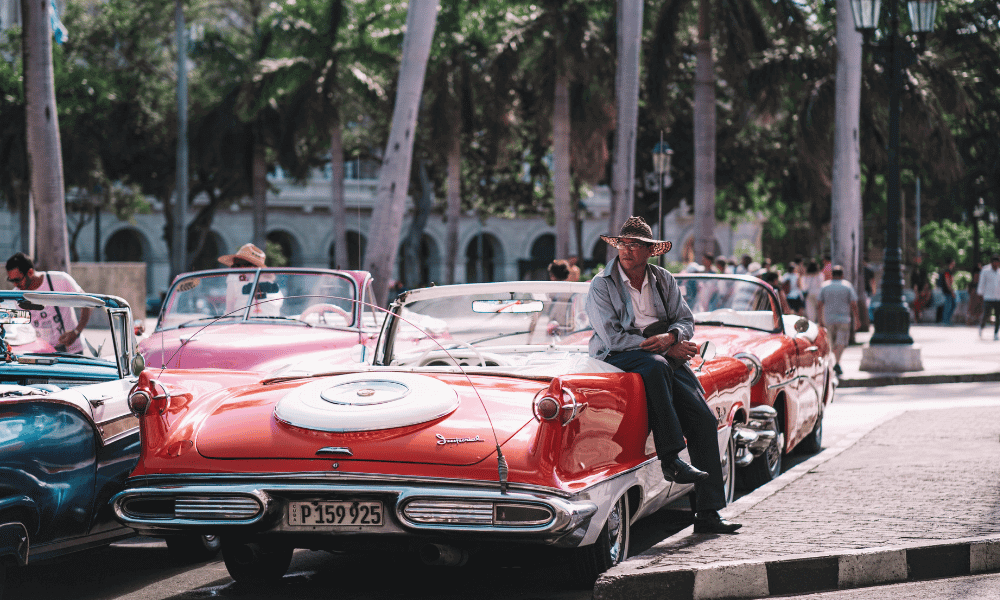
The Cuba of the 1950s was in many ways remarkably modern. Havana was one of the most sophisticated cities in Latin America. Americans flocked there to holiday. The city was full of grand hotels, nightclubs and American cars. Cuba had one of the highest rates of car ownership in the world.
But that wasn’t the whole story.
Away from Havana there was widespread poverty, huge inequality and limited access to healthcare and education for many ordinary Cubans. When Castro came to power in 1959, one of the Revolution’s genuine achievements was extending education and healthcare across the island. For decades Cuba has produced world-class doctors, teachers, scientists, artists and athletes despite having very limited resources.
That achievement shouldn’t be dismissed nor should the fact that many Cubans genuinely believed they were building a fairer society. The problem is that political ideals don’t keep the lights on and, for much of Cuba’s revolutionary history, the economy has struggled to match the ambitions.
When the Soviet Union collapsed in 1991, Cuba entered what became known as the Special Period. Overnight the island lost most of its trading partners, fuel supplies evaporated and daily life became a struggle.
When I first travelled to Cuba, not long after that period had ended, people still spoke about it in almost mythical terms. There were stories of endless blackouts. Of people losing dramatic amounts of weight. Of bicycles replacing buses. Of meals becoming increasingly creative as ingredients disappeared. As one Cuban put it to me, “We discovered there were parts of plants we never knew were edible.”
People laughed when they told these stories. Cubans usually do.
Humour is one of their great survival mechanisms, but nobody ever doubted how hard those years had been.
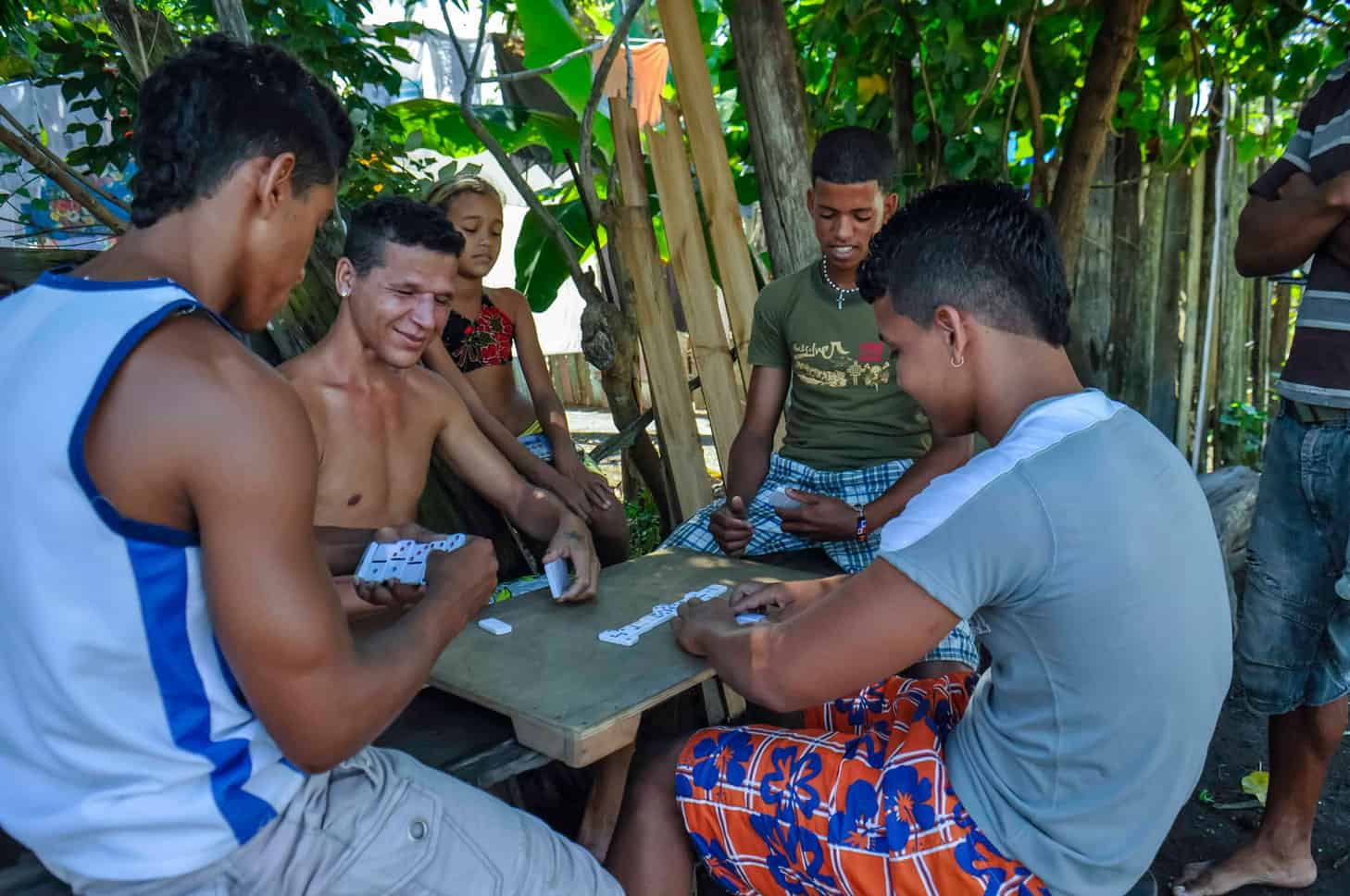 What’s remarkable is that even now, when the current crisis is arguably worse in many respects, Cubans still compare everything to the Special Period. It’s become their benchmark for suffering.
Which brings me back to the original question.
How on earth are Cubans surviving today?
Recently I asked my friend Anibal. His answer was brutally simple. “There are only three ways people are surviving on a state salary.”
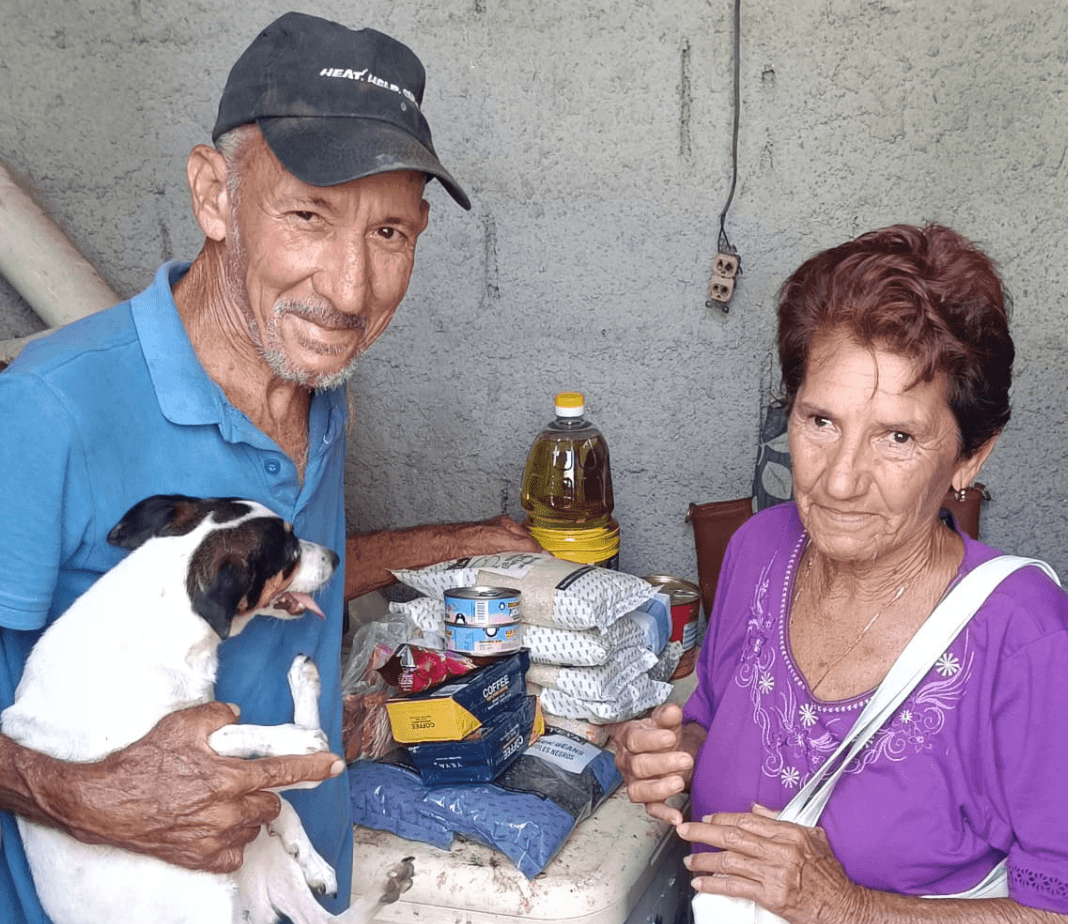
The first: they’re not. Anibal describes pensioners living largely on the subsidised bread ration available through the local bodega and drinking sugar water. A small allocation of rice comes through the ration book system, and whatever else they can obtain.
That may sound dramatic, but anyone spending time in Cuba right now hears similar stories. Pensioners are among the hardest hit. State salaries have been left far behind by inflation. Anibal told me he sees elderly neighbours getting thinner and thinner.
I can hear the worry in his voice.
The second answer: invento.
If there is one word every visitor to Cuba should learn, it’s invento. Literally it means invention. In reality, it means finding a way and Cubans are masters of finding a way.
Need to repair a 1957 Chevrolet with no spare parts? Find a way.
Need to keep a Soviet refrigerator running forty years after it should have died? Find a way.
Need to cook dinner during a blackout? Find a way.
Need to feed a family on a salary that barely covers a carton of eggs? Find a way.
For decades invento has kept the country functioning.
Sometimes that meant repairing things.
Sometimes it meant recycling things.
Sometimes it meant acquiring things through channels that aren’t entirely official.
Anibal laughed when he explained it.
“If you worked in a paint factory, paint somehow left the paint factory. If you worked in a tobacco factory, cigars somehow left the tobacco factory.”
Most Cubans didn’t regard this as theft in the conventional sense. You weren’t stealing from an individual. You were taking from the state.
But what’s changed is that Cuba is no longer a country where everybody is equally poor.
Nowadays there are haves and have-nots. Some run the country, some receive money from abroad, some own businesses. Some have generators, solar panels, cars or electric motorbikes.
Others have nothing.
And where inequality appears, crime usually follows.
Anibal told me that some people with solar panels now hire guards or someone stays at home. Houses belonging to wealthier Cubans are increasingly targeted. Anything valuable attracts attention.

The third answer: family abroad.
Or perhaps more accurately, family abroad keeping family at home alive.
Since the pandemic, Cuba has experienced one of the biggest waves of emigration in its history. Almost every Cuban family now has a son, daughter, cousin, brother or aunt somewhere overseas.
Spain. Miami. Mexico. Anywhere.
Some left legally through Spain’s citizenship laws. Others headed “por los volcanes“, flying to Nicaragua and making the long overland journey north through Central America.
Almost everyone knows someone who has gone and almost everyone knows someone who depends on the money they send back.
So, what makes Cubans so bloody resilient?
I don’t think it’s because they’re naturally tougher than everyone else, I think it’s because they’ve had to be.
After decades of shortages, blackouts and uncertainty they have developed survival skills that people in richer countries have simply never needed.
They know how to repair things.
They know how to share things.
They know how to laugh at things.
Above all, they know how to adapt.
But I think we should be careful about celebrating Cuban resilience too much. Resilience sounds admirable. And it is but resilience is also what people are forced to become when they have no alternative.
The truth is that many Cubans are exhausted. They’re tired of shortages. Tired of power cuts. Tired of uncertainty. Tired of watching their children leave because they see no future on the island. They’re tired of being defined by their famous resilience.
Yet every morning they get up and carry on.
Perhaps that’s the real answer.
Cubans survive the way they’ve always survived.
Through family.
Through community.
Through humour.
Through invento.
And through a stubborn determination to keep going, even when common sense might suggest giving up.