
It’s been a while since I last wrote.
Not because there hasn’t been anything to say, but because, like so many others this year, attention has been pulled in too many directions at once. Halfway through 2026, the world already feels heavy with crises.
And in the midst of all that noise, Cuba has quietly slipped out of focus.
But on the island, the situation hasn’t stood still. If anything, it’s getting harder.
A crisis that touches everything
Since the start of the year, Cuba has faced a sharp and sudden loss of fuel supplies. Oil shipments from Venezuela and Mexico -once reliable partners – have dwindled, while wider geopolitical pressures have made it difficult for others to step in.
The effects aren’t abstract. They are woven into everyday life.
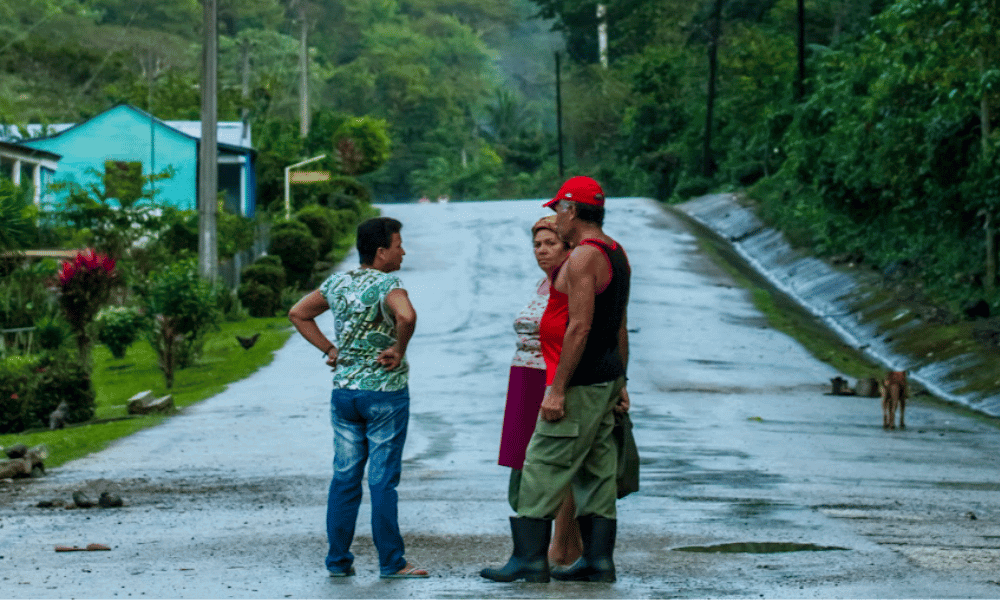
Power cuts now dominate daily routines. In many homes, electricity is available for only a few hours a day. Food is harder to find and increasingly expensive when it is available. Public transport is unreliable, essential services are disrupted, and waste collection has become sporadic.
Life becomes smaller, slower and harder.
For those who can manage it, solar panels are beginning to appear more frequently – a sign of adaptation in a system under immense strain. But for most Cubans, such solutions remain out of reach.
The weight of it all
When I speak to friends and family across Cuba, one word comes up repeatedly:
Tired.
Tired of the heat without fans or air conditioning.
Tired of planning meals around uncertainty.
Tired of waking up to find the power has gone yet again – and taken the contents of the fridge with it.
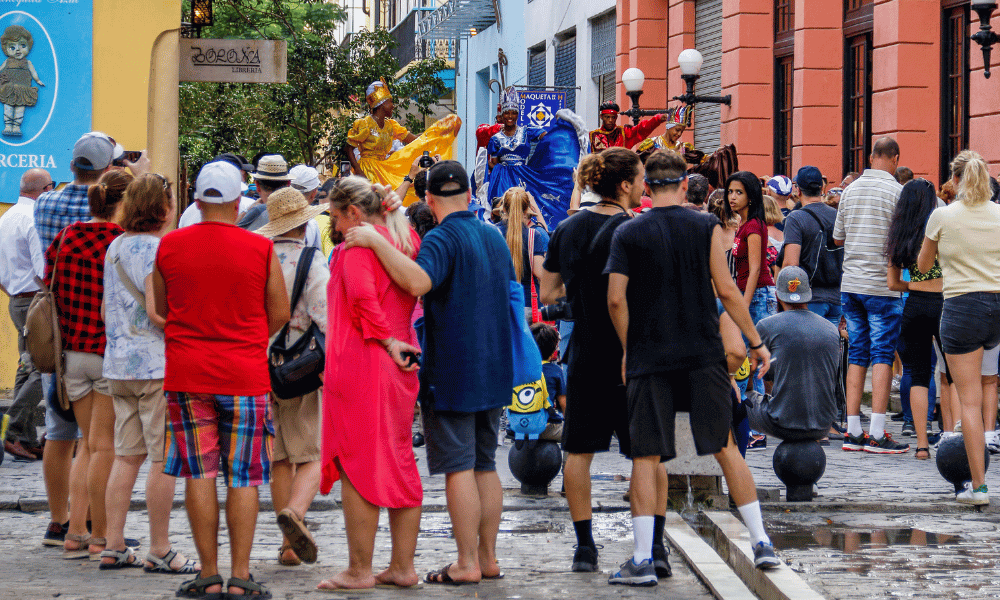
Cuba has always been a place of resilience, ingenuity and humour. Anyone who has travelled there knows that. But even resilience has its limits.
Increasingly, frustration is expressed after dark through cacerolazos – the rhythmic banging of pots and pans that echoes through neighbourhoods. A collective release. A public expression of exhaustion. A reminder that daily life has become increasingly difficult.

When travel stops, what remains?
For us at Cubania, the decision has been clear: we’ve paused all trips to the island.
Not because we’ve lost faith in Cuba – quite the opposite – but because travel, right now, isn’t viable in a meaningful or responsible way.
But stopping travel doesn’t mean stepping away.
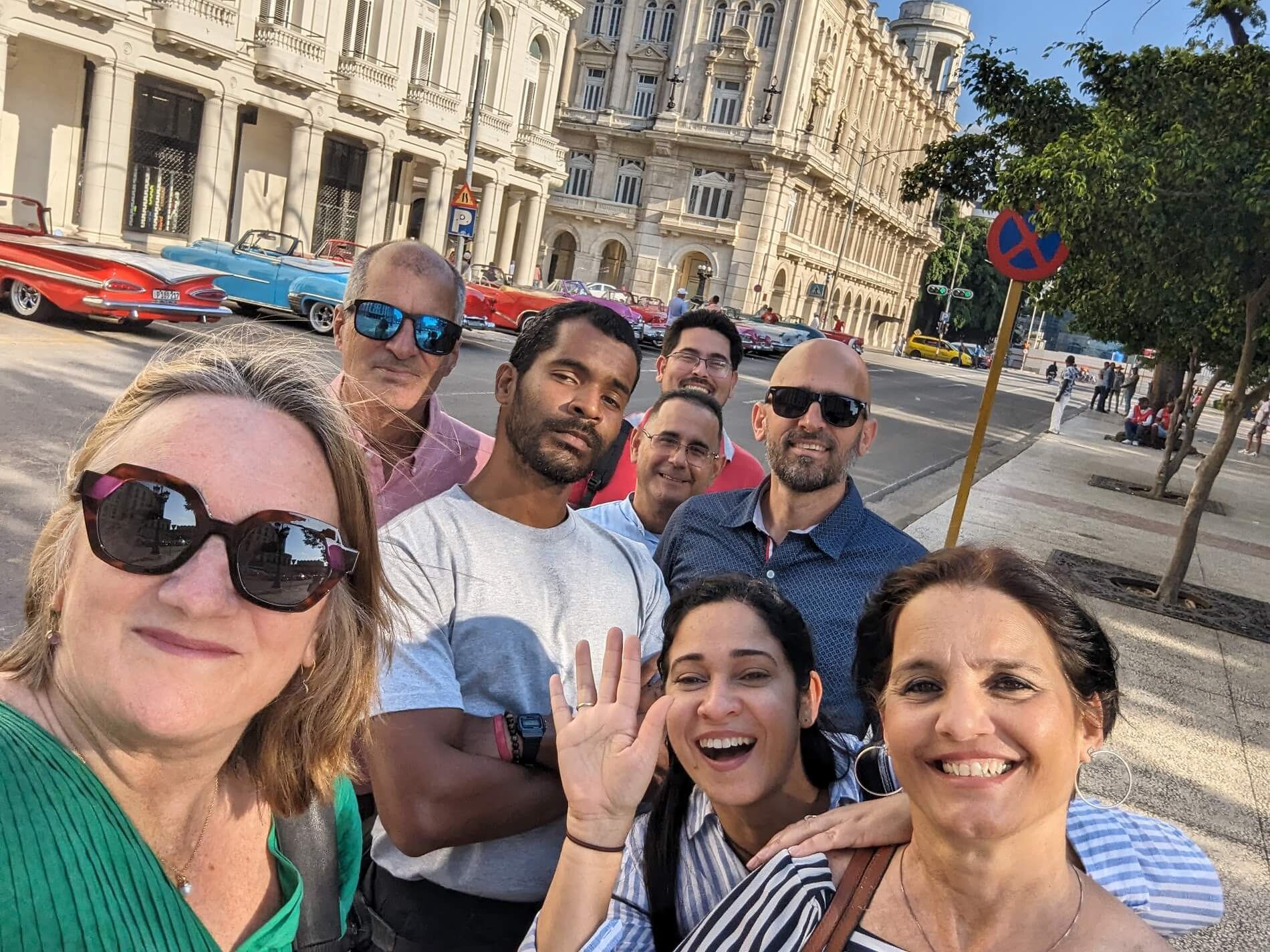
Cuba has given so much to us over the years. Friendships, memories, opportunities, and a sense of connection that extends far beyond tourism. It would feel wrong to simply wait on the sidelines until things improve.
So we asked ourselves a simple question:
What can we do right now that might actually help?
Starting small, staying local
With the support of our community, we’ve shifted our focus to something immediate and practical: getting food to families who need it most.
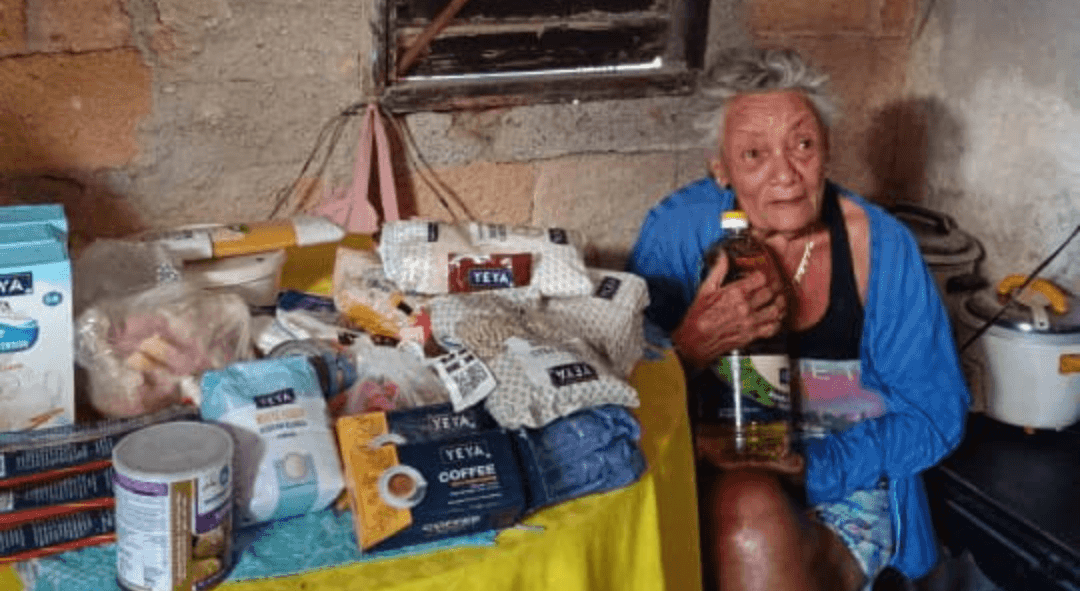
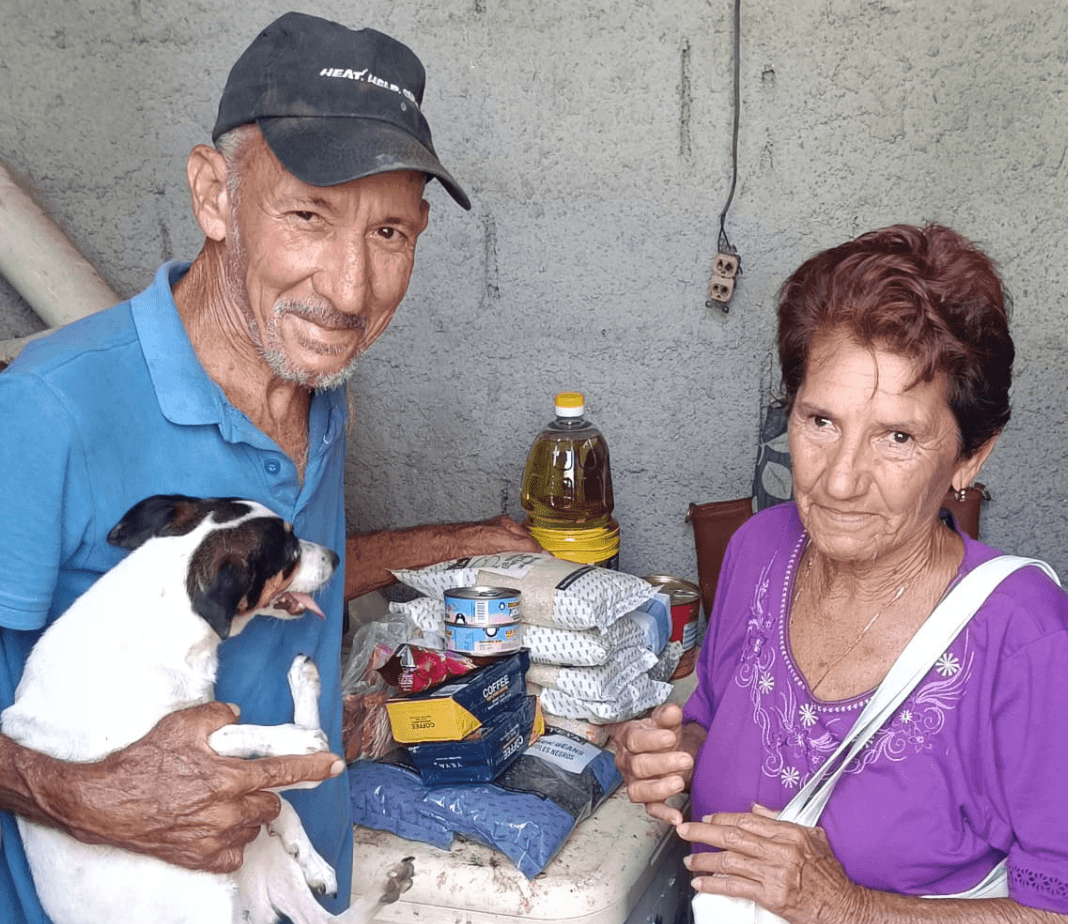
So far, we’ve supported 61 households with essential food parcels. Rice, beans, cooking oil, eggs, chicken, milk and other household basics.
Simple things, but increasingly difficult to access.
What sounds straightforward is anything but.
Fuel shortages mean deliveries can’t always be made by vehicle. Much of the work happens locally, through people we trust, walking from house to house and distributing supplies within their own communities.
It’s not a sophisticated operation.
It’s people helping people.
And it works.
Every delivery is documented, not only for transparency, but to maintain a connection between those contributing and the families receiving support. In a world where crises can often feel distant and overwhelming, that connection matters.
Community makes it possible
In Trinidad, our friend Osmary Santander has been instrumental in making this possible, mobilising family members, neighbours and friends to identify households most in need.
Alongside this, we’ve partnered with Trinitarios De A Pie, a grassroots collective extending support beyond food to include clothing, bedding and household essentials.
This isn’t a large charity operation with a complex infrastructure.
It’s something much more human.
Built on trust. Built on relationships. Built on communities looking after one another when times are tough.
A drop in the ocean – and still worth it
We’re under no illusion about the scale of the challenges Cuba faces.
What we’re doing is small.
But small doesn’t mean insignificant.
For the families receiving support, it means meals on the table. It means one less thing to worry about this week. It means knowing that someone, somewhere, hasn’t forgotten them.
And sometimes, that matters just as much as the food itself.

How you can help
You can support the project directly through our Tropipay account (it’s like Monzo but for Spanish and Cuban businesses) , helping us continue and expand the food parcel programme. We know, the link sometimes doesn’t work! So if you can’t complete your payment via Tropipay, please send us your donation to our Tide Account in the UK. Please reference with your name/CFF so we can assign the money to our Community Food Fund. NO MENTIONS OF CUBA PLEASE! US banking sanctions will create havoc with your money!
We’re already more than halfway towards our goal of supporting 100 families. With a little more support, we can go further.
Keeping Cuba in the conversation
Cuba rarely makes international headlines these days.
But that doesn’t mean the challenges facing its people have disappeared.
If you’ve read this far, thank you.
If you’re able to support, share this article, join the challenge, make a donation, or simply help keep Cuba in the conversation, it genuinely makes a difference.
Because while the world may not be paying much attention right now, the people of Cuba are still there – navigating extraordinary challenges with the resilience and warmth that have always defined them.
And they deserve not to be forgotten.