
There’s no doubt about it: Cuba is at a pivotal moment. Relations with the United States have entered a new era, and 2026 may well be the year that everything changes for this extraordinary island. For travellers, the headlines can feel overwhelming – so here’s a clear, honest, and traveller-friendly look at what’s really happening, why, and what it means for your visit.

Why 2026 Feels Different
Cuba is facing an increasingly difficult moment after Mexico paused its oil shipments, one of the island’s last steady fuel lifelines. The result has been immediate: longer queues for fuel, more blackouts, and greater strain on daily life. At the same time, Washington has become more explicit in its aims, with President Donald Trump predicting the Cuban government’s collapse and Secretary of State Marco Rubio openly saying the U.S. wants political change and will keep sanctions in place until then.
In response, President Miguel Díaz-Canel has taken a defiant stance, accusing the U.S. of trying to force change through economic pressure and invoking the slogan “patria o muerte” to signal that Cuba will not back down. For ordinary Cubans, the situation means worsening shortages and growing uncertainty, while politically both sides appear locked into their positions, leaving little room for compromise.
A well‑known Cuban‑American businessman, Hugo Cancio – born in Havana and now owner of several companies including a food‑delivery business on the island – recently summed up the national crossroads Cuba is facing:
“In light of recent developments in Venezuela, Cuba today faces a clearer choice than ever: to open itself… to economic reform, institutional modernisation, and broader civic participation… or to continue down a path of managed decline. The real risk is not change; the real risk is postponing it until the cost becomes irreversible.”
(Miami Herald, Jan 2026)
Cuba’s economy, society, and international relationships are shifting rapidly – creating challenges, yes, but also opportunities for reform.
How We Got Here: A Short History of Struggle and Resilience
1962-1990: The Embargo and the Cold War Lifeline
In 1962, President John F. Kennedy imposed a comprehensive US trade embargo on Cuba, cutting the island off from international trade, banking and finance. CIA attempts to assassinate Fidel Castro (dozens, if not hundreds) continued for decades – a surreal cat-and-mouse saga that shaped US-Cuba relations.
During the Cold War, the USSR served as Cuba’s economic sponsor: oil and technology flowed in; sugar flowed out. Thousands of Cubans studied and worked across the Eastern Bloc, forging deep connections in Moscow, Prague, East Berlin, and beyond.
Cuba as a Symbol in Latin America
Revolutionary Cuba became a beacon of resistance, inspiring movements across the continent seeking independence from US economic dominance.
1990s-2016: Isolation, Tourism, and a Glimpse of Hope
The collapse of the Soviet Union plunged Cuba into near-economic free fall. Tourism became the country’s survival strategy, slowly opening society to the world. The peak of this thaw came in 2016 with President Obama’s historic visit – a moment filled with hope that relations could finally improve.
2017-2020: Progress Reversed
Under Trump and then Biden, policies of engagement ended. Cuba was re-listed as a US state sponsor of terrorism (despite lack of evidence), and travel restrictions tightened – devastating for a nation now dependent on tourism.
2020-2023: COVID‑19, Crisis, and Mass Emigration
Then came the pandemic. Cuba closed for 2½ years, and its economy imploded. The government prioritised hotel construction over healthcare and food supply, deepening internal frustration. In July 2021, rare nationwide protests erupted; leaders were imprisoned. Between 2020-2023, an estimated 2.5 million Cubans left the country, mostly to the US, reshaping Cuban society in ways still unfolding today.
Cuba Today: The Reality for Visitors
To understand travel in Cuba in 2026, it helps to understand how ordinary Cubans are living:
1. Hard Cash is King
Those with access to USD or EUR can live relatively comfortably. Small import businesses thrive, but prices are out of reach for anyone reliant on a Cuban state salary.
2. State Institutions Are Struggling
Hospitals face shortages of basic medical supplies. State ration shops have little to offer. Fuel is scarce – and the US is confiscating tankers bound for Cuba, tightening the squeeze. Life in Cuba can feel precarious but somehow people carry on.
3. Power Cuts Are Daily Life
Scheduled and unscheduled blackouts are frequent, affecting everything from cooking to sleep to food storage. The good news? Most quality casas particulares and paladares have invested in solar power or generators, meaning hospitality services continue to function even during extended outages.
4. A Private Sector That Depends on Tourism
Despite the challenges, Cuban entrepreneurship is thriving. Private restaurants, drivers, tour guides, small shops, artists, mechanics, architects, and food importers all rely on travellers. Your trip directly supports Cuban families navigating a very difficult moment.

Practical Travel Tips for Visiting Cuba in 2026
1. Bring plenty of cash (USD or EUR)
Assume that you will only be able to spend in cash, as ATMs often do not work with foreign cards. Bring small bills for tipping, and either USD or EUR, and avoid large denominations.
2. Book casas and services with solar or backup power
All casas booked by Cubania have a secondary power source which will kick in when there’s a powercut. Ask your host if they have solar panels, batteries, or a generator to run fans during blackouts.
3. Expect limited food variety and embrace simple meals
Menus can change daily depending on supply; carry snacks and choose well known paladares known that source fresh ingredients daily and have a secondary power source to store food safely.
4. Download everything before travel
Wi-Fi remains inconsistent. Offline maps, translation apps, entertainment, and important documents are essential. Most hotels and casas will offer wi-fi connection for access to WhatsApp messaging and other communication apps. If you’re staying a while, consider buying a Cuban phone line to access mobile data cheaply.
5. Bring essentials you might take for granted
Prescription medicines, toiletries, sunscreen, insect repellent, power banks, and a small torch/headlamp. Shops do not reliably stock basics.
6. Use licensed private taxis and local guides
They are safer, more reliable, and your money goes directly to families. All the transportation Cubania uses is licensed.
7. Travel slower
With power cuts, supply shortages, and longer waits, allow buffer days and spend more time in each destination. Cuba rewards slow travel anyway.
8. Be patient, kind, and curious
Cuba’s challenges are real, but Cubans remain extraordinarily warm and welcoming.

So… Should You Still Visit Cuba in 2026?
Yes – absolutely. Not blindly, not unprepared, but with awareness and intention. Cuba remains:
-
One of the safest destinations in the Americas
-
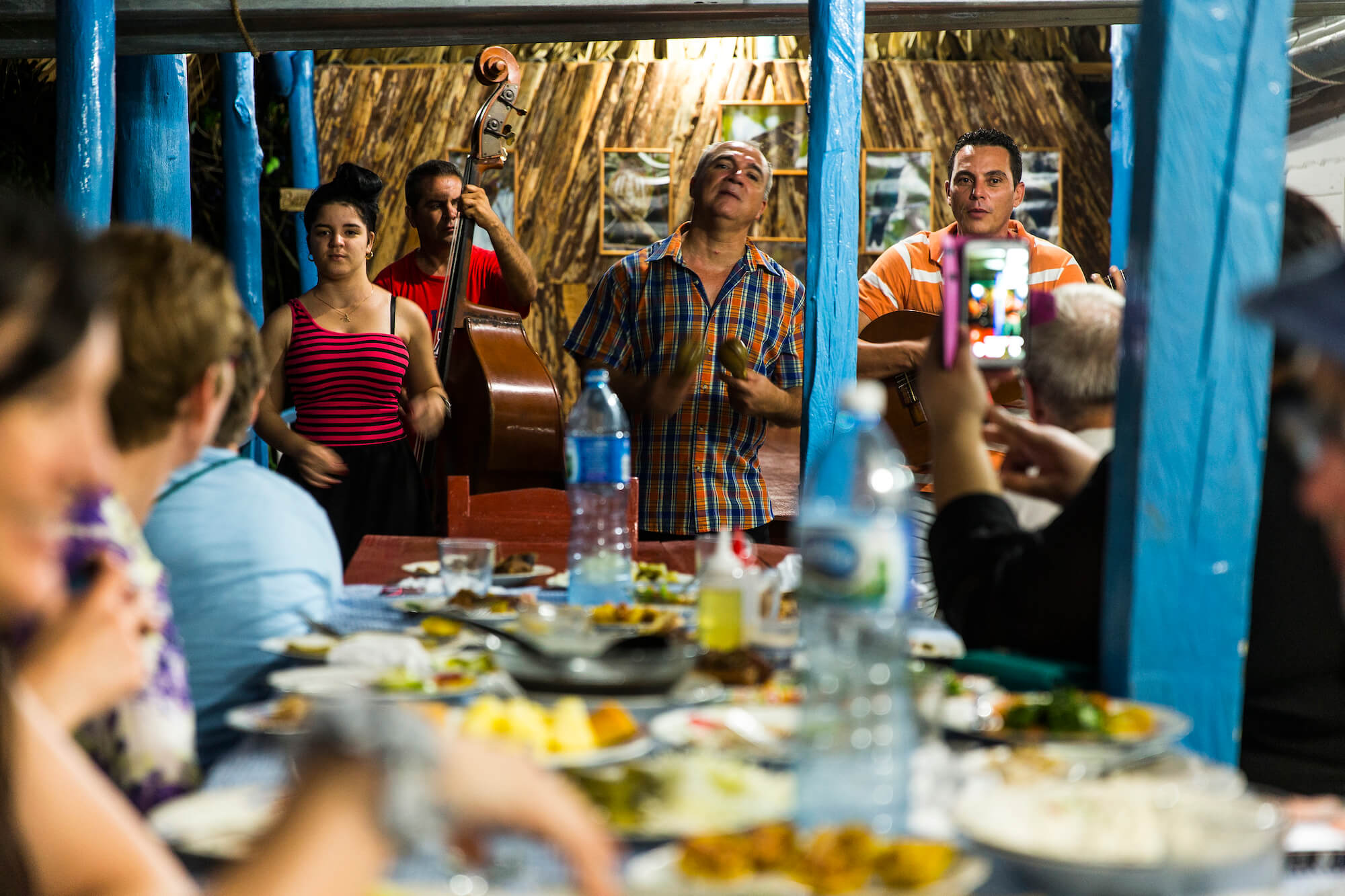
One of the most culturally vibrant places in the world
-
A country where tourism genuinely supports local people
Visiting now is both meaningful and memorable. Responsible tourism – staying in private accommodation, eating at paladares, booking local experiences – directly supports Cuban households and the private sector.
A Final Thought
Cuba stands on the edge of potential transformation. There are no guarantees – only possibilities. But one thing is clear: this is a country that has survived the impossible time and again.
With awareness, patience, and curiosity, your visit can make a real difference – while allowing you to experience one of the most vibrant, culturally rich, and warm-hearted countries on Earth.